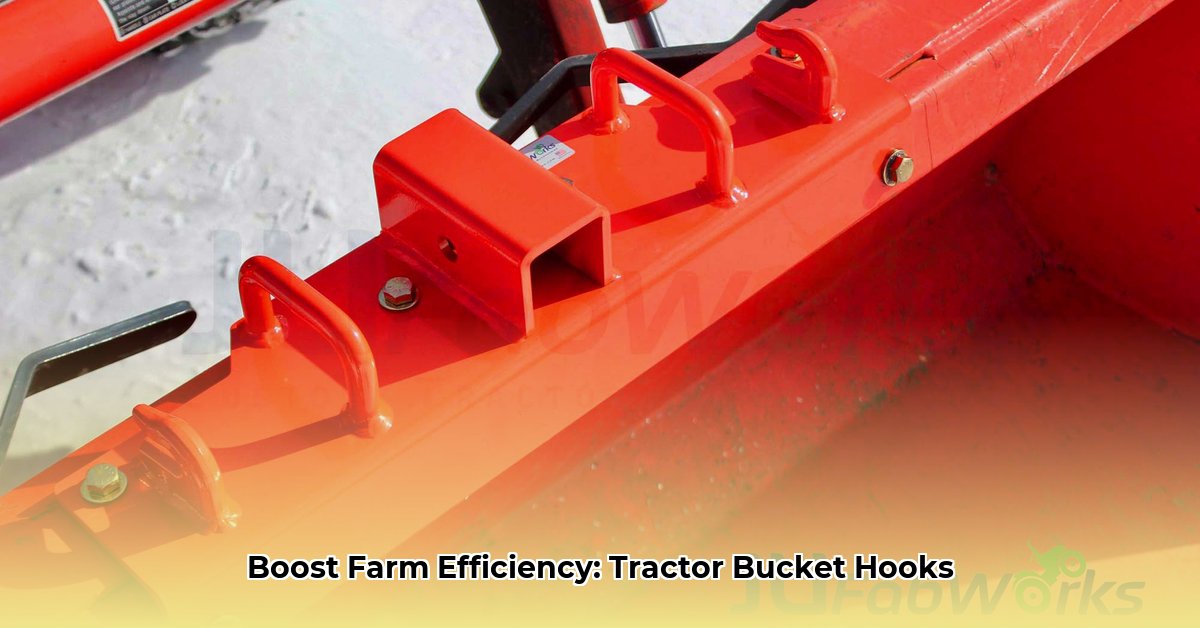
Ready to streamline your farm operations and boost efficiency? Bolt-on tractor bucket hooks offer a simple yet powerful solution for small-to-medium sized farms. This guide provides a comprehensive overview of selecting, installing, and maintaining these essential attachments, helping you maximize productivity while minimizing costs and environmental impact. For added durability, consider tractor bucket teeth.
Understanding Bolt-on Tractor Bucket Hooks
Bolt-on tractor hooks are designed to attach securely to your tractor's bucket, providing convenient attachment points for various tasks. Unlike welded hooks, bolt-on options offer ease of installation and removal, flexibility for different jobs, and cost-effectiveness, making them ideal for farms without welding equipment or expertise. They are a crucial tool for tasks such as lifting, pulling, and dragging heavy materials, improving operational efficiency significantly.
Types of Tractor Bucket Hooks
Several types of tractor bucket hooks cater to different needs and budgets. Key factors to consider include material, weight capacity, and design.
Material
High-strength steel is the most prevalent material, offering durability and resistance to wear and tear. However, exploring sustainable alternatives, such as recycled steel, is becoming increasingly important for environmentally conscious farmers.
Weight Capacity
Always choose hooks with a weight capacity exceeding the heaviest load you anticipate lifting. Underestimating this can lead to failure and potential accidents. Check your tractor and bucket's specifications to ensure compatibility.
Design
Hook designs vary. Some offer improved leverage for heavier objects, while others have specific attachment points for specialized tasks. Select a design that aligns with your typical workloads.
Here's a comparison table:
| Hook Type | Material | Weight Capacity (lbs) | Pros | Cons |
|---|---|---|---|---|
| Bolt-On | High-Strength Steel | Varies | Easy installation, cost-effective, versatile, removable | Limited by bucket design, may require specific bolt sizes |
| Welded | High-Strength Steel | Varies | Strong, permanent attachment | Requires welding expertise, difficult removal, less flexible |
| Quick-Attach | Varies | Varies | Quick changes between attachments | Higher initial cost, more complex system |
Choosing the Right Hooks for Your Needs
Selecting appropriate hooks involves considering several factors:
- Tractor Type and Bucket Size: Ensure the hooks are compatible with your tractor's lift capacity and your bucket's dimensions and mounting points.
- Intended Use: Heavy-duty tasks require robust hooks with higher weight ratings than lighter applications.
- Budget: While higher-quality hooks may involve a higher upfront cost, their increased durability and longevity often translate to significant long-term savings.
- Sustainability: Consider the environmental impact of the materials and manufacturing processes. Opt for recycled steel or other sustainable alternatives whenever possible.
Step-by-Step Installation Guide
Safe and proper installation is crucial. Follow these steps:
- Preparation: Thoroughly clean the bucket's mounting points to ensure a secure connection. Remove any rust or debris.
- Positioning: Carefully align the hooks with the mounting points, ensuring they are perfectly positioned before tightening.
- Fastening: Use the correct size bolts, washers, and nuts specified by the manufacturer. Tighten securely and evenly, but avoid over-tightening, which can damage the hooks or the bucket.
- Testing: Before using the hooks for heavy lifting, test them with a light load to verify secure attachment and proper functionality.
Maintenance and Safety
Regular maintenance extends the lifespan of your hooks and prevents accidents.
- Regular Inspection: Inspect the hooks frequently for wear, damage, or loose bolts.
- Lubrication: Lubricate moving parts to prevent rust and corrosion, especially in harsh weather conditions.
- Proper Storage: Store the hooks in a dry, protected area when not in use.
- Weight Limits: Never exceed the manufacturer's stated weight capacity.
- Safety Gear: Always wear appropriate safety gear, including gloves and sturdy boots, when working with heavy equipment.
Isn't it crucial to prioritize safety when handling heavy loads? A simple check could prevent a major accident.
Cost-Benefit Analysis: Bolt-on vs. Welding
Bolt-on hooks generally offer a more cost-effective solution compared to welding. Welding requires specialized skills and equipment, increasing labor costs. While welded hooks offer superior strength, the simplicity and reusability of bolt-on options frequently offset the initial cost difference over the equipment's lifespan. Furthermore, the labor savings can be substantial.
Sustainable Practices
Choosing eco-friendly materials like recycled steel reduces the environmental footprint. Durable hooks minimize waste by lasting longer than cheaper alternatives. Supporting manufacturers committed to sustainable practices further enhances your farm's environmental responsibility.
Conclusion
Bolt-on tractor hooks significantly boost efficiency and productivity for small-to-medium sized farms. With proper selection, installation, and maintenance, these attachments provide a cost-effective and sustainable solution for various farm tasks. Prioritizing safety and choosing environmentally responsible products ensures long-term benefits and contributes to responsible farming practices.
Resources
(Note: This section would include links to relevant manufacturers, suppliers, and regulatory information in a published article.)